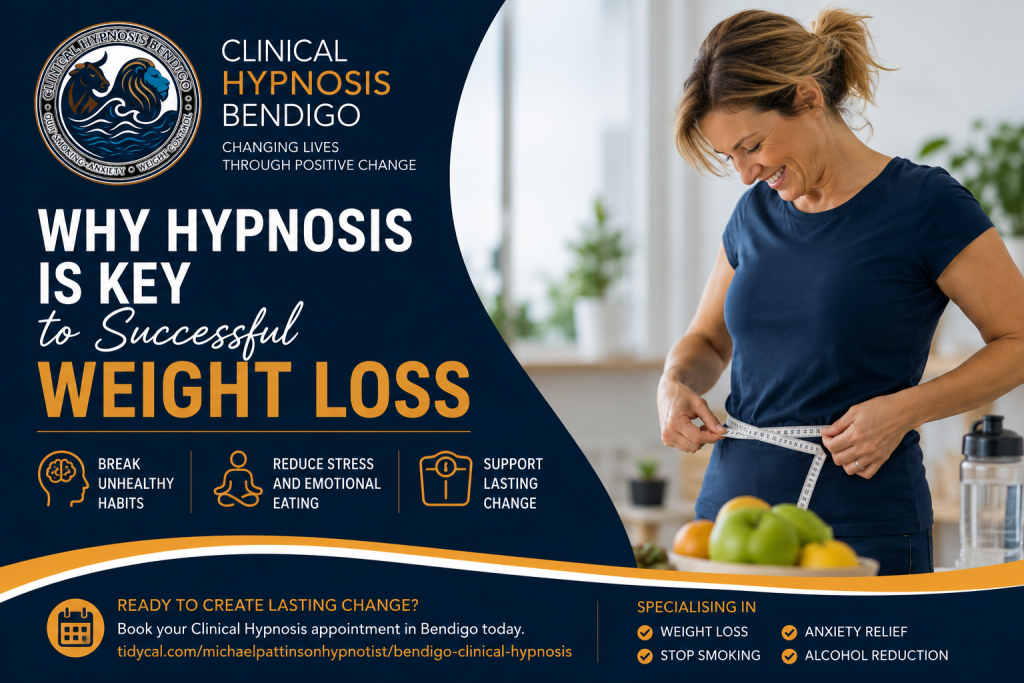
Why Hypnosis Is Key to Successful Weight Loss
Most Weight Loss Programs Focus on the Wrong Problem
Millions of people attempt to lose weight every year.
They try new diets.
They join fitness programs.
They count calories.
They purchase meal plans.
Some succeed temporarily. Many regain the weight they worked so hard to lose.
This often leads to frustration and self-criticism.
People begin to believe they lack willpower or discipline.
Yet in many cases the problem is not a lack of knowledge.
Most people already know what healthy eating looks like.
They know vegetables are generally better than processed foods.
They know excessive sugar consumption can contribute to weight gain.
They know exercise supports health and weight management.
The challenge is rarely information.
The challenge is behaviour.
This is why hypnosis for weight loss has become increasingly popular. Clinical hypnosis focuses on the patterns, habits and emotional drivers that influence eating behaviour rather than simply providing more information.
At Clinical Hypnosis Bendigo, many clients discover that lasting weight loss becomes easier when the mind and nervous system are addressed alongside nutrition and lifestyle choices.
Weight Loss Is Often More Emotional Than Nutritional
One of the biggest misconceptions about weight loss is the belief that hunger is always physical.
In reality, many people eat for reasons that have little to do with hunger.
Food can become associated with comfort.
Food can become associated with reward.
Food can become associated with relaxation.
Food can become associated with stress relief.
Consider a common scenario.
Someone has a difficult day at work.
They feel overwhelmed.
They arrive home exhausted.
Suddenly they find themselves reaching for chocolate, takeaway food or snacks despite having eaten recently.
The body may not need food.
The nervous system may simply be seeking relief.
This is where many diets fail.
The diet addresses the food.
The emotional trigger remains untouched.
The behaviour eventually returns.
The Nervous System Plays a Major Role in Weight Gain
The nervous system constantly influences behaviour.
When the nervous system is calm and regulated, people generally make better decisions.
They are more patient.
They think more clearly.
They experience fewer impulsive urges.
When the nervous system is overloaded, the opposite often occurs.
Cravings increase.
Impulsivity increases.
Motivation decreases.
Emotional eating becomes more likely.
For many individuals, excess weight is not simply a food problem.
It is partly a nervous system regulation problem.
The body seeks comfort.
The brain seeks relief.
Food becomes the solution.
Over time this pattern becomes automatic.
Why Willpower Eventually Fails
Many weight loss programs rely heavily on willpower.
Willpower works for a short period.
Eventually stress appears.
Life becomes busy.
Unexpected challenges occur.
The nervous system becomes overwhelmed.
Old habits return.
This does not mean the individual has failed.
It means the strategy relied entirely on conscious effort.
Human behaviour is largely automatic.
Many daily decisions occur without conscious thought.
People drive familiar routes automatically.
They perform routines automatically.
They eat automatically.
They react automatically.
Successful weight loss often requires changing these automatic patterns.
This is one reason hypnosis can be so valuable.
What Is Hypnosis?
Clinical hypnosis is a focused state of attention that allows individuals to become more receptive to positive change.
It is not mind control.
It is not sleep.
It is not surrendering control.
Most people experience natural hypnotic states every day.
Watching a movie.
Reading a book.
Driving a familiar route.
Daydreaming.
Clinical hypnosis uses this natural ability in a structured way to support behavioural change.
How Hypnosis Supports Weight Loss
Hypnosis helps address many of the factors that contribute to excess weight.
Emotional Eating
Many people use food to manage emotions.
Hypnosis can help individuals develop healthier responses to stress, frustration, boredom and anxiety.
Cravings
Cravings often follow learned patterns.
Hypnosis can help weaken unhelpful associations and strengthen healthier alternatives.
Self-Sabotage
Many people start weight loss programs with enthusiasm before returning to old habits.
Hypnosis can help identify and modify the underlying patterns contributing to self-sabotage.
Motivation
Motivation naturally rises and falls.
Hypnosis can reinforce long-term goals and strengthen commitment to positive change.
Self-Image
Many individuals carry negative beliefs about themselves.
These beliefs often influence behaviour.
Hypnosis can help create a healthier self-image that supports long-term success.
Why Anxiety Often Sits Beneath Weight Problems
Anxiety and weight gain are frequently connected.
When people experience ongoing anxiety, they often seek relief.
Some turn to alcohol.
Some turn to smoking.
Some turn to excessive screen time.
Many turn to food.
Food provides temporary comfort.
The brain learns the connection.
The behaviour becomes reinforced.
The individual may believe they have a food problem when the real issue is an anxious nervous system seeking regulation.
This is why anxiety management can play such an important role in successful weight loss.
Hypnosis Helps Create New Patterns
The brain learns through repetition.
Every repeated behaviour strengthens a pathway.
The good news is that new pathways can also be created.
Hypnosis provides an opportunity to reinforce healthier patterns.
Instead of reaching for food during stress, individuals can learn alternative responses.
Instead of eating from boredom, they can develop greater awareness.
Instead of acting automatically, they can become more intentional.
Over time these new responses become easier and more natural.
Weight Loss Is About More Than Appearance
Many people begin a weight loss journey because they want to look different.
While appearance may be a motivating factor, the benefits extend much further.
Healthy weight management can support:
- Increased energy
- Better sleep
- Improved mobility
- Greater confidence
- Better physical health
- Improved emotional wellbeing
- Increased resilience
The goal is not simply to lose weight.
The goal is to improve quality of life.
Why Lasting Change Requires a Different Approach
Quick fixes rarely create lasting results.
Extreme diets often create temporary outcomes.
Sustainable change requires addressing behaviour at its source.
This means understanding:
- Why you eat
- When you eat
- What emotions drive eating
- How stress influences decisions
- How habits develop
- How the nervous system affects behaviour
Clinical hypnosis addresses these deeper factors.
Rather than fighting behaviour, hypnosis helps create conditions that support healthier choices.
Clinical Hypnosis Bendigo
If you have struggled with weight loss despite multiple diets and programs, it may be time to look beyond food alone.
Many people discover that once emotional eating, anxiety and automatic habits are addressed, healthy choices become easier to maintain.
Clinical hypnosis provides a practical approach to behavioural change by helping individuals regulate the nervous system, strengthen motivation and develop healthier habits.
If you are ready to create lasting change, book an appointment with Clinical Hypnosis Bendigo.
Book Online:
https://tidycal.com/michaelpattinsonhypnotist/bendigo-clinical-hypnosis
Frequently Asked Questions
Can hypnosis help with weight loss?
Clinical hypnosis may support weight loss by helping individuals change eating habits, reduce emotional eating and strengthen motivation.
Does hypnosis control my mind?
No. Clinical hypnosis is a state of focused attention. You remain aware and in control throughout the process.
Why do diets often fail?
Many diets focus on food while ignoring emotional eating, stress and behavioural patterns that influence eating habits.
Is emotional eating common?
Yes. Many people use food to manage stress, boredom, anxiety and other emotions.
Can hypnosis help reduce cravings?
Hypnosis may help individuals change the way they respond to cravings and reinforce healthier behavioural patterns.